Author: Podiatry Associates

  • How to Prevent and Treat Diabetic Foot Ulcers

    How to Prevent and Treat Diabetic Foot Ulcers

    [et_pb_section fb_built=”1″ _builder_version=”3.22″ custom_padding=”3px|0px|14px|0px|false|false” fb_built=”1″ bb_built=”1″ _i=”0″ _address=”0″][et_pb_row _builder_version=”3.25″ background_size=”initial” background_position=”top_left” background_repeat=”repeat” _i=”0″ _address=”0.0″][et_pb_column type=”4_4″ _builder_version=”3.25″ custom_padding=”|||” _i=”0″ _address=”0.0.0″ custom_padding__hover=”|||”][et_pb_text _builder_version=”3.27.4″ _i=”0″ _address=”0.0.0.0″]

    For a diabetic patient, developing a foot ulcer can be one of the most serious complications. The nature of diabetes puts these individuals at higher risk for wounds on their lower extremities such as ulcers. Approximately 15% of diabetics cases have been known to result in ulcer development. And about 6% of diabetic patients with ulcers are admitted into the hospital for ulcer infection and complications.


    But diabetics who take the time to understand and properly treat the side effects of their disease can minimize the risks and through preventative measures, some diabetics may even eliminate the need for diabetic foot ulcer treatment in the first place. Our podiatrists in Baltimore would like to help you learn. Let’s start with what exactly is an ulcer.


    What is a Diabetic Foot Ulcer

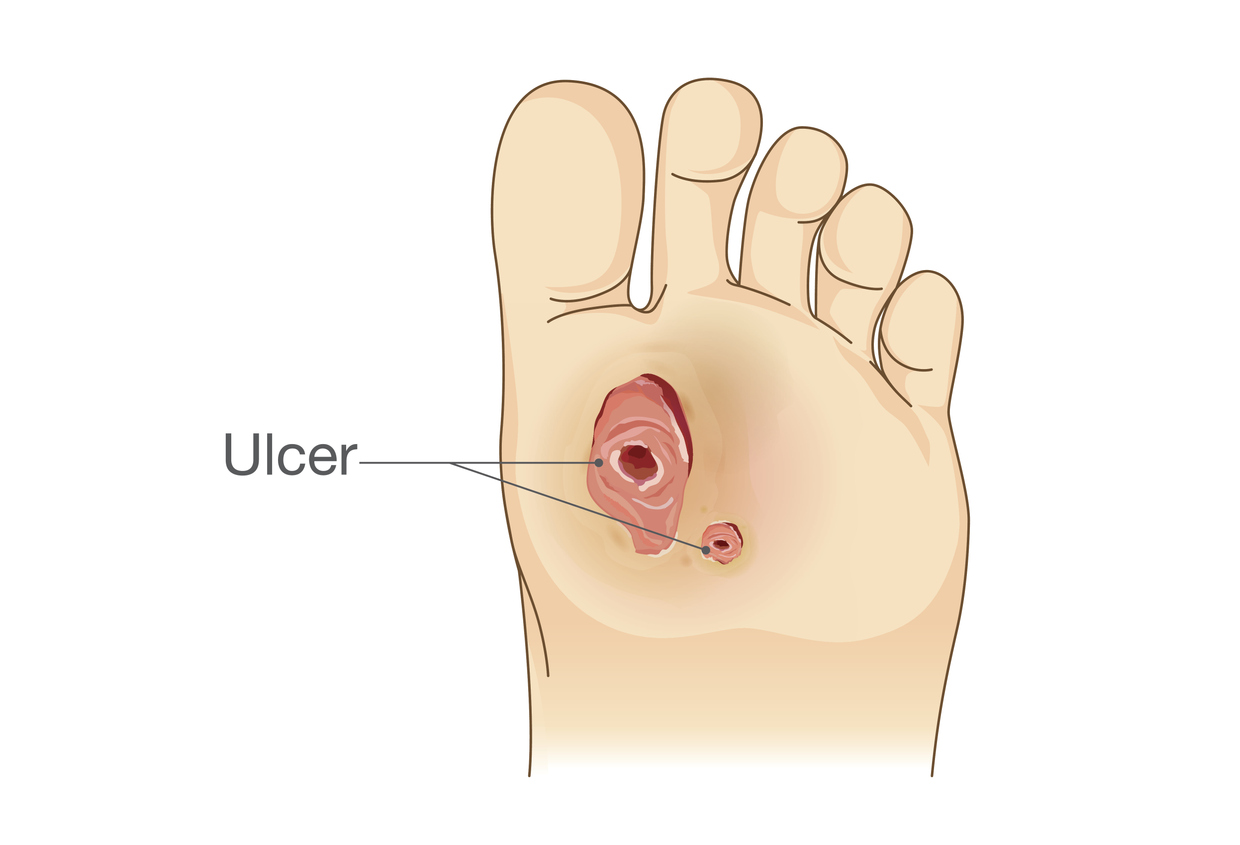
    A foot ulcer is an open sore or wound usually located on the bottom of the foot and sometimes on the ankle or leg. A foot ulcer can either be on the surface of the skin or extend pretty deep through all three core layers of the skin. 


    How Does a Diabetic Foot Ulcer Develop?

    The cause of foot ulcers is typically related to high blood glucose levels, which results in poor circulation of the feet, ankles, and even legs. Any cuts or sores that develop on a diabetic’s lower extremities are very slow to heal due to the lack of proper blood circulation, which increases the danger of infection. If proper diabetic foot ulcer treatment isn’t begun on time, the infection could lead to an onset up gangrene and potential amputation of the foot or limb. 


    A Foot Ulcer Can Lead to What Types of Infections?

    If the foot ulcer is not properly treated and infection sets in, it can take the form of the following:

    • A foot abscess or pocket of pus
    • Gangrene (condition when body tissue darkens and dies – can lead to amputation)
    • Cellulitis (bacterial skin infection that looks very swollen and red and spreads easily)
    • Osteomyelitis (or bone infection)


    How Can a Foot Ulcer Develop Unnoticed?

    Foot ulcers can often develop undetected because most diabetics also have a nerve damage condition called neuropathy. This means that they have a hard time sensing or cannot sense heat, cold, pain or pressure at all. If they develop a small sore or cut and can’t sense that it’s even there, then the open wound will worsen and even get infected without immediate notice. That’s why it’s important for diabetics to follow best prevention practices or schedule immediate wound care treatment with our podiatrists in Baltimore if their feet already show signs of developing foot ulcers.


    How to Prevent Diabetic Foot Ulcers

    There are many preventative measures that you can take to minimize the chance of a diabetic foot ulcer and the need for wound care treatment.  Among these are daily foot inspections, keeping your feet clean and dry, and many other simple but important tasks. Please reference this resource that our podiatrists in Baltimore put together for your convenience: Podiatrist Approved Tips for Diabetic Foot Care Health.

    If you need professional diabetic foot ulcer treatment in Baltimore or wound care treatment in Baltimore and the surrounding areas or have any questions about the treatments described above, check out our Podiatry Associates locations and find a podiatrist near you. Feel free to call our scheduling office to discuss your specific situation: (833) 500-FEET.

    [/et_pb_text][/et_pb_column][/et_pb_row][/et_pb_section][et_pb_section fb_built=”1″ _builder_version=”3.22″ custom_padding=”5px|0px|54px|0px|false|false” fb_built=”1″ bb_built=”1″ _i=”1″ _address=”1″][et_pb_row _builder_version=”3.25″ background_size=”initial” background_position=”top_left” background_repeat=”repeat” _i=”0″ _address=”1.0″][et_pb_column type=”4_4″ _builder_version=”3.25″ custom_padding=”|||” _i=”0″ _address=”1.0.0″ custom_padding__hover=”|||”][et_pb_text _builder_version=”3.29.3″ hover_enabled=”0″ _i=”0″ _address=”1.0.0.0″]

    Time to See a Podiatrist?

    If you have any of the issues described above, it’s time to consult an expert. Connect with Podiatry Associates for an evaluation. All of our doctors are board certified/qualified and we’re dedicated to preserving your foot health.


    Other Related Articles:

    [/et_pb_text][/et_pb_column][/et_pb_row][/et_pb_section]

  • Everything You Need To Know About A Podiatrist

    Everything You Need To Know About A Podiatrist

    [et_pb_section bb_built=”1″ _builder_version=”3.20.2″ custom_padding=”3px|0px|14px|0px|false|false” next_background_color=”#000000″][et_pb_row _builder_version=”3.20.2″ background_size=”initial” background_position=”top_left” background_repeat=”repeat”][et_pb_column type=”4_4″][et_pb_text _builder_version=”3.20.2″]

    Suffering from foot problems and finding it troublesome to carry out your daily routine? This means you should schedule an appointment with one of our podiatrists in Baltimore. But before that, here are some questions you may have about podiatrists:


    What’s a Podiatrist’s Medical Education?

    Talking about their medical training, podiatrists accomplish four years of study and training in podiatric medical school. Then they gain experience in at least three years of residency training in hospitals and clinics. They are certified by the American Board of Podiatric Medicine once they pass all their exams. Most podiatrists also specialize in foot surgery and must have a licence to do so. 


    What Do Podiatrists Specialize In?

    Podiatrists usually are specialists in foot and ankle injuries, foot surgery, wound care treatment, diabetic foot treatment, ingrown toenail surgery, and other forms of foot care as well. You might as well go for a monthly or a yearly check up even if you feel there is nothing wrong. They can peel off hard skin off your feet and groom your toenails properly. And that’s not all – they will also advise you on what shoes are best for your specific feet as well!


    What Common Foot Problems Do Podiatrists Treat?

    Common problems that podiatrists deal with include ingrown toenails, blisters, warts, corns, calluses, bunions, nail infections, foot infections, smelly feet, heel pain, heel spurs, dry or cracked skin on your heels, flat feet, hammertoes, neuromas, sprains, foot arthritis, foot injuries, foot ligament or muscle pain. Other specific issues they focus on include tumors, wound care, fractures of broken bones, ulcers, walking patterns etc. If you have a problem with your foot or ankle, chances are that your local podiatrist in Baltimore can help you out.

    While we’re on the topic of common foot problems, here are some risk factors that can trigger common foot issues: obesity, arthritis, diabetes, heart diseases, high cholesterol, wearing shoes that don’t fit properly or lack sufficient support, etc. A podiatrist should ask you about your lifestyle habits and any known chronic illnesses so that he/she will be able to focus on the source of the issue and reach a diagnosis and plan of treatment.


    Why Do I Need to See a Podiatrist?

    If you’re considering seeing a podiatrist in Baltimore, here are a few reasons that should help you realize your need to schedule an appointment with them:

    • If you are having pain in your foot, the podiatrist will help you discover the source of the issue so that you can properly treat the issue and heal. Take an ingrown toenail infection for example. Some people try ignoring it, hoping it will go away. When instead, the doctor can simply surgically remove a sliver of the nail at the corner so that you toe won’t become inflamed like that again.
    • Flat feet are also a common issue podiatrists deal with. A podiatrist will take molds of your feet to make custom foot support shoe inserts for you called orthotics.
    • Have diabetes? It’s wise to schedule routine visits to the podiatrist to treat  numbness, pain, and open wounds such as ulcers on your feet and legs. Here are the diabetic foot care treatments that are best left to your podiatrist – aka, don’t try this at home.


    No matter what your foot and ankle problem may be, Podiatry Associates can help are the best podiatrists in Baltimore. They have been providing quality foot care services for decades. Check out our list of podiatry office locations in Baltimore and surrounding areas and schedule your appointment today. Feel free to call our scheduling office to discuss your specific situation: (833) 500-FEET.


    [/et_pb_text][/et_pb_column][/et_pb_row][/et_pb_section][et_pb_section bb_built=”1″ _builder_version=”3.0.47″ custom_padding=”5px|0px|54px|0px|false|false” prev_background_color=”#000000″][et_pb_row _builder_version=”3.0.48″ background_size=”initial” background_position=”top_left” background_repeat=”repeat”][et_pb_column type=”4_4″][et_pb_text _builder_version=”3.20.2″]

    Time to See a Podiatrist?

    If you have any of the issues described above, it’s time to consult an expert. Connect with Podiatry Associates for an evaluation. All of our doctors are board certified/qualified and we’re dedicated to preserving your foot health.

    Bookmark this Event

    [/et_pb_text][/et_pb_column][/et_pb_row][/et_pb_section]
  • What Diabetic Foot Care Treatments Are Best Left to Your Podiatrist?

    What Diabetic Foot Care Treatments Are Best Left to Your Podiatrist?

    [et_pb_section fb_built=”1″ _builder_version=”3.22″ custom_padding=”3px|0px|14px|0px|false|false” fb_built=”1″ bb_built=”1″ _i=”0″ _address=”0″][et_pb_row _builder_version=”3.25″ background_size=”initial” background_position=”top_left” background_repeat=”repeat” _i=”0″ _address=”0.0″][et_pb_column type=”4_4″ _builder_version=”3.25″ custom_padding=”|||” _i=”0″ _address=”0.0.0″ custom_padding__hover=”|||”][et_pb_text _builder_version=”3.27.4″ _i=”0″ _address=”0.0.0.0″]

    Foot care is essential for diabetes patients because diabetes is proven to have its effects on foot nerves because of a significant reduction in blood flow. Diabetic patients have a higher chance of foot infection caused by an injury that can become life-threatening and/or require diabetic wound care.

    If you have diabetes and you are careless about your feet, you are putting yourself at high risk. A minor injury can turn into a significant complication or a deadly disease. Therefore it is essential to visit one of our podiatrists in Baltimore to ensure that you are receiving professional foot care and treatment for foot health conditions.

    If you are facing any of the following diabetic foot care issues, please don’t try and do it yourself – these are best left to the foot care professionals:

    [/et_pb_text][/et_pb_column][/et_pb_row][/et_pb_section][et_pb_section fb_built=”1″ _builder_version=”3.22″ custom_padding=”5px|0px|54px|0px|false|false” fb_built=”1″ bb_built=”1″ _i=”1″ _address=”1″][et_pb_row _builder_version=”3.25″ background_size=”initial” background_position=”top_left” background_repeat=”repeat” _i=”0″ _address=”1.0″][et_pb_column type=”4_4″ _builder_version=”3.25″ custom_padding=”|||” _i=”0″ _address=”1.0.0″ custom_padding__hover=”|||”][et_pb_text _builder_version=”3.27.4″ _i=”0″ _address=”1.0.0.0″]

    Shoe Fitting

    Diabetic patients have to be extra careful about their footwear. Visit our podiatrists in Baltimore immediately if you are facing poor blood circulation and/or loss of sensation in your feet due to your new shoes. Diabetic shoe fitting will ensure that you wear a properly fitted shoe and do not develop any foot sores that can become life-threatening if left unattended.


    Professional Foot Exams 

    It is important for diabetics to have their feet inspected by a professional on a routine basis. Since many diabetics have lost feeling in their feet, serious foot issues can easily be left unnoticed. Schedule an appointment periodically with our foot and ankle specialists at Podiatry Associates to help prevent any further foot complications caused by diabetes.

    For extra assurance, seek medical advice and get your feet checked by our podiatric surgeons Baltimore biannually or annually at least. If you notice swelling, redness, or have any suspicions about your foot health, immediately schedule an appointment with one of our trusted podiatrists in Baltimore.  


    Toe Nail Care

    It is advisable to have a podiatrist regularly perform the toenail care for diabetics since a small cut from trimming their own nails could quickly escalate into a larger issue. You can help minimize further issues by having a podiatrist regularly perform your nail care. 

    In-grown nails and nail infections especially should always be treated by an experienced podiatrist. Visit our podiatrists for ingrown toenail treatment baltimore, for proper diabetic ingrown nail surgery and infection control.


    Foot Infection or Diabetic Foot Ulcer Treatment 

    In diabetic foot care, the role of a podiatrist can range from preventative treatments and education to diagnosing and treating issues before they develop into a bigger problem. In serious cases like a diabetic foot infection or diabetic foot ulcer treatment, podiatrists provide regular treatment and schedule frequent check-ups to ensure that the patient’s condition is steadily improving. 

    As a rule of thumb for diabetic foot treatment, it is best to consult a podiatrist for shoe fitting, foot examinations, routine nail care and especially foot infections and diabetic wound care treatment.

    If you need professional diabetic foot care treatment in Baltimore or wound care treatment in Baltimore and the surrounding areas or have any questions about the treatments described above, check out our Podiatry Associates locations and find a podiatrist near you. Feel free to call our scheduling office to discuss your specific situation: (833) 500-FEET.


    [/et_pb_text][et_pb_text _builder_version=”3.29.3″ _i=”1″ _address=”1.0.0.1″]

    Time to See a Podiatrist?

    If you have any of the issues described above, it’s time to consult an expert. Connect with Podiatry Associates for an evaluation. All of our doctors are board certified/qualified and we’re dedicated to preserving your foot health.


    Other Related Articles:

    [/et_pb_text][/et_pb_column][/et_pb_row][/et_pb_section]
  • Podiatrist Approved Tips for Diabetic Foot Care Health

    Podiatrist Approved Tips for Diabetic Foot Care Health

    [et_pb_section fb_built=”1″ _builder_version=”3.22″ custom_padding=”3px|0px|14px|0px|false|false” fb_built=”1″ bb_built=”1″ _i=”0″ _address=”0″][et_pb_row _builder_version=”3.25″ background_size=”initial” background_position=”top_left” background_repeat=”repeat” _i=”0″ _address=”0.0″][et_pb_column type=”4_4″ _builder_version=”3.25″ custom_padding=”|||” _i=”0″ _address=”0.0.0″ custom_padding__hover=”|||”][et_pb_text _builder_version=”3.27.4″ _i=”0″ _address=”0.0.0.0″]

    Proper foot care is imperative for people with diabetes because even a minor injury such as a small cut can lead to severe implications. Poor circulation and nerve damage caused by diabetes can put you at risk of leg/foot amputation and irreversible foot damage; therefore, you must prevent injuries and infections from developing in the first place to avoid the need for diabetic wound care.

    [/et_pb_text][/et_pb_column][/et_pb_row][/et_pb_section][et_pb_section fb_built=”1″ _builder_version=”3.22″ custom_padding=”5px|0px|54px|0px|false|false” fb_built=”1″ bb_built=”1″ _i=”1″ _address=”1″][et_pb_row _builder_version=”3.25″ background_size=”initial” background_position=”top_left” background_repeat=”repeat” _i=”0″ _address=”1.0″][et_pb_column type=”4_4″ _builder_version=”3.25″ custom_padding=”|||” _i=”0″ _address=”1.0.0″ custom_padding__hover=”|||”][et_pb_text _builder_version=”3.27.4″ _i=”0″ _address=”1.0.0.0″]

    Here are some essential health practices for diabetics:

    1.    Daily Foot Inspection

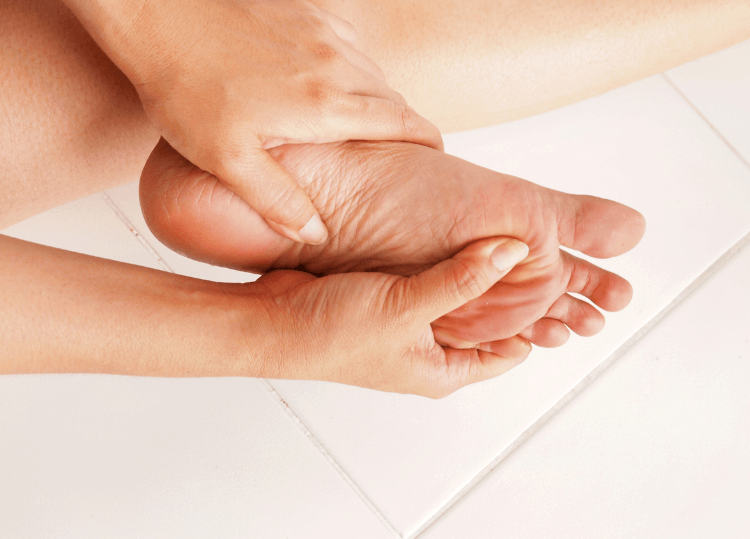
    People with diabetes should inspect their feet for cuts, blisters, nail problems, swelling and redness daily. It is important to be thorough; our podiatrists at Podiatry Associates suggest that you use a magnifying handheld mirror to check the bottom of your feet. If you notice anything call our podiatrists in Baltimore at Podiatry Associates to schedule an appointment. Keep in mind that this daily inspection should not replace your routine diabetic check-up with your podiatrist.

    2.    Daily Gentle Cleaning

    Gentle regular cleaning of your feet is essential, do not use hot water when washing your feet, only use lukewarm water. Our podiatrists suggest sticking to a comfortable lukewarm temperature that you would use to bathe a newborn baby. It is vital to be gentle when cleaning your feet and avoid scrubbing since feeling in your feet is typically absent. Use a soft washcloth or sponge and gently dry by blotting or patting. Don’t forget to clean and dry between your toes. 

    3.    Never Treat Yourself

    Our podiatrist strongly advise against treating yourself even for simple things like cutting your own nails and trimming calluses to more complicated treatments of corns, ingrown toenail removal surgery, and diabetic foot ulcer treatment. This means no bathroom surgery and medicated pads. Only a professional should perform diabetic foot care treatment Baltimore.

    4.    Invest In Socks For Diabetics

    Our podiatrists in Baltimore advise people with diabetes to always wear a fresh pair of clean and dry socks daily. Special socks, made especially for people with diabetes, is an excellent investment because these socks are designed with extra cushioning, no elastic tops, and cover higher than the ankle. Diabetic socks are made from moisture-wicking fibers that keep feet dry and minimize the chances of fungal infection caused by sweat.

    5.    Clean Out Your Shoes

    Before you wear your shoes, it is essential that you clean them out by shaking them and feeling the inside. This is significant because a pebble or other foreign object might cause a small cut or injury that could quickly escalate into a bigger issue. So always inspect and clean out your shoes before you put them on.

    6.    Avoid Walking Barefoot

    As mentioned earlier, any cut or injury can lead to a big problem. So it is best never to walk barefoot – not even when you are at home! Shoes and slippers minimize the chances of getting a scratch or a cut.

    7.    Keep Your Diabetes In Check

    For every diabetic, keeping the blood sugar levels under control is most important and the best way to prevent further complications and issues. Schedule a regular appointment for diabetic foot care Baltimore.

    8.    Stay Active

    It is essential to stay active to keep your blood flowing. Daily walks and exercise will keep your feet in good health, and it will also have a positive impact on your overall health.

    9.    Quit Smoking

    Although, it might seem at first to be completely unrelated to taking care of your feet, smoking is especially hazardous for diabetics. Our podiatrists in Baltimore recommend diabetes patients to refrain from smoking because it can restrict blood flow to your feet.


    Foot care should be a necessary part of your daily routine. Remember, proper diabetic foot health starts with you so set a routine and follow the above tips on an everyday basis.

    If you need professional diabetic foot care treatment in Baltimore and the surrounding areas or have any questions about the tips described above, check out our Podiatry Associates locations and find a podiatrist near you. Feel free to call our scheduling office to discuss your specific situation: (833) 500-FEET.

    [/et_pb_text][et_pb_text _builder_version=”3.29.3″ _i=”1″ _address=”1.0.0.1″]

    Time to See a Podiatrist?

    If you have any of the issues described above, it’s time to consult an expert. Connect with Podiatry Associates for an evaluation. All of our doctors are board certified/qualified and we’re dedicated to preserving your foot health.


    Other Related Articles:

    [/et_pb_text][/et_pb_column][/et_pb_row][/et_pb_section]

  • Can a Podiatrist Perform Surgery? What Types?

    Can a Podiatrist Perform Surgery? What Types?

    [et_pb_section fb_built=”1″ _builder_version=”3.22″ custom_padding=”3px|0px|14px|0px|false|false” fb_built=”1″ _i=”0″ _address=”0″][et_pb_row _builder_version=”3.25″ background_size=”initial” background_position=”top_left” background_repeat=”repeat” _i=”0″ _address=”0.0″][et_pb_column type=”4_4″ _builder_version=”3.25″ custom_padding=”|||” _i=”0″ _address=”0.0.0″ custom_padding__hover=”|||”][et_pb_text _builder_version=”3.29.3″ _i=”0″ _address=”0.0.0.0″]

    A podiatrist is a healthcare professional who specializes in the diagnosis and treatment of abnormal conditions of the lower limbs and feet. More specifically, a podiatrist is trained to be a doctor of podiatric medicine and can perform surgery, prescribe drugs, and order lab tests. A podiatrist can also treat and perform surgery for common foot problems such as ingrown toenails, plantar fasciitis, foot ulcer treatment, corns, calluses and more.

    In general, people are aware of what podiatrists do and that they are professionally trained to perform surgery, but we get many inquiries about what specific surgeries that podiatrists perform, so here is our comprehensive answer:

    [/et_pb_text][/et_pb_column][/et_pb_row][/et_pb_section][et_pb_section fb_built=”1″ _builder_version=”3.22″ custom_padding=”5px|0px|54px|0px|false|false” fb_built=”1″ _i=”1″ _address=”1″][et_pb_row _builder_version=”3.25″ background_size=”initial” background_position=”top_left” background_repeat=”repeat” _i=”0″ _address=”1.0″][et_pb_column type=”4_4″ _builder_version=”3.25″ custom_padding=”|||” _i=”0″ _address=”1.0.0″ custom_padding__hover=”|||”][et_pb_text _builder_version=”3.29.3″ _i=”0″ _address=”1.0.0.0″]

    Can A Podiatrist Treat A Broken Foot?

    Even though not all podiatrists perform surgery, here in the Baltimore, Maryland region at Podiatry Associates, we perform a widespread of foot and ankle surgeries, whether it be the treatment of a fracture, a broken foot, a broken toe or ankle.

    Our podiatrists are trained to perform advanced surgical techniques, which include traumatic surgeries like the treatment of broken toes, foot fractures, toe fractures, and foot or ankle arthritis.


    Does A Podiatrist Perform Ankle Surgery?

    Podiatrists or foot doctors most commonly treat foot and ankle fractures or sprains, which include performing ankle surgery. For example, if a patient has chronic ankle instability, then lateral ankle ligament repair or reconstruction may be needed.

    If a patient experiences sudden severe pain, bruising, and swelling in their ankle, they should get it checked out by a podiatrist in case they have a fractured or broken ankle. Our podiatrists will take an x-ray of their ankle and see what the injury may be. In cases of fractures, an ankle brace and or ankle surgery may be needed.  

    Achilles tendon surgery is another example of ankle surgery that our podiatrists perform, but we’ll talk more about that a bit later.


    Can A Podiatrist Remove An Ingrown Toenail?

    Yes! Our podiatrists are trained in scalpel blade techniques and local anesthesia administration, which allows them to perform surgery of nails such as the treatment of ingrown nails. An ingrown toenail occurs when a toenail grows into the flesh beside it, which is incredibly uncomfortable. It can be caused due to the natural curvature of your toe, shoes that press on the toe because of being too tight, toe or toenail injury, or improper cutting of the toenail.

    Ingrown toenails are extremely common, and if they don’t heal naturally, you go to a Podiatrist to get your ingrown toenail treated. Our podiatrists help remedy the situation by performing a simple ingrown toenail surgery to remove a part of the toenail or the complete toenail according to your situation. At Podiatry Associates, our foot doctors are trained to carry out this procedure and administer local anesthesia to numb the area before the surgery.


    What Is Metatarsal Foot Surgery?

    Each foot has five metatarsal bones that are located behind each toe. The first metatarsal is the one behind the big toe, and the fifth metatarsal bone is behind the little toe. The most common Metatarsal foot surgery is done on the first metatarsal and the joint between the big toe for foot arthritis or bunions. For people who have arthritis, the metatarsophalangeal joints can become arthritic which causes a swelling or inflammation of the joint lining, causing discomfort and pain. Our podiatrists in Baltimore, MD can perform Metatarsal foot surgery to treat severe arthritic foot pain by removing the metatarsophalangeal joint heads, which will help to alleviate the pain caused by walking that is often associated with this condition. Metatarsal foot surgery is usually performed by the podiatrist in outpatient surgery centers or hospital where general anesthesia or intravenous sedation can be administered.


    What Is Achilles Tendon Surgery?

    The Achilles tendon is the largest tendon in the human body. This is the main tendon that connects the leg calf muscle to the heel. The Achilles tendon is like a strong and fibrous cord that help humans in foot movement functions like walking, jumping, climbing, and running. This tendon can be ruptured or damaged during intense physical activities. Athletes are more prone to Achilles tendon damage.

    Our podiatrists can perform Achilles Tendon Surgery to repair any major or minor rupture and/or tear. Achilles tendon surgery is not always the first option to heal Achilles tendon damage (depending on the intensity of the damage). In most cases, rest, medicines, physiotherapy and braces are enough to repair the Achilles tendon.


    Can A Podiatrist Perform Hammertoe Surgery?

    Yes! A podiatrist can perform hammertoe surgery, which is one of the treatments for imbalanced toe muscle. Typically, hammertoes are caused by wearing the wrong shoe size, wearing pointed shoes or shoes that are narrow. In some cases hammertoe surgery can be avoided by performing rigorous strengthening exercises in addition to wearing a properly fitting shoe. Early symptoms of a hammertoe include foot pain, irritation, redness, burning, inflammation,or foot corns, and calluses.  


    What About Bunion Surgery And Corn Removal?

    Our podiatrists also perform bunion surgery as well as corn removal. A bunion is a medical condition in which the patient is suffering from a bump at the base of the big toe. Whereas, corns are a condition where areas of the foot become hard or thick skinned. Patients that are suffering from bunion are most likely to also have corns. These conditions can be painful, and if not treated in time with appropriate bunion care, surgery may be necessary.  


    What Can A Podiatrist Do For Foot Arthritis?

    Arthritis is the inflammation of one or more of your joints, which causes pain and stiffness. Podiatrists can relieve the discomfort and pain associated with foot arthritis through non-surgical treatments such as avoiding or limiting activities that aggravate the foot arthritis like impact sports. (i.e. substituting running or tennis with swimming, which is much easier on the joints) Losing weight and physical therapy are some of the other common options. If none of the non-surgical treatments help, then foot arthritis surgery is the alternative. Our podiatrists can help you minimize discomfort and pain caused by foot arthritis and prevent further regeneration through appropriate and timely care.

    If you are experiencing foot pain or have any of the issues described above, check out our locations and find a podiatrist near you. Feel free to call our scheduling office to discuss your specific situation: (833) 500-FEET.  

    [/et_pb_text][et_pb_text _builder_version=”3.29.3″ _i=”1″ _address=”1.0.0.1″]

    Time to See a Podiatrist?

    If you have any of the issues described above, it’s time to consult an expert. Connect with Podiatry Associates for an evaluation. All of our doctors are board certified/qualified and we’re dedicated to preserving your foot health.


    Other Related Articles:

    [/et_pb_text][/et_pb_column][/et_pb_row][/et_pb_section]

  • A Guide For Bunions

    A Guide For Bunions

    Bunions are a common and frustrating condition. About 23% of people age 18 to 65 will develop them over the course of their lifetime and more than one-third of people over age 65 have them.

    Here’s a guide to bunions, also known as hallux valgus, from how they develop on the feet to tips for treating them with the help of a podiatrist.

    What is a Bunion?

    A bunion forms when the joint of the moves out of place, causing the affected toe to stick out or develop a bump. While minor bunions may not be bothersome, a more serious bunion can cause significant pain.

    Not all bunions are on the big toe, although this is the most common spot. They also occur on the outside of the foot, at the join of the littlest toe. Small bunions on the little toe are often called bunionettes or tailor’s buttons.

    Why Do I Have Bunions?

    We hate to tell you this, but it might just be genetic. Bunions run in families. This foot problem in a parent can easily develop in their child too.

    Women are more likely to have bunions than men due to the hormones that come with puberty and pregnancy. People of European descent are also more likely to have bunions.

    Sometimes bunions form due to ill-fitting footwear or repetitive motion issues. Wearing high heels is a known contributor to bunion development. The same goes for wearing shoes that are too tight or playing a sport that aggravates a toe joint problem.

    Many bunions form simply due to age. Older adults are much more likely to have bunions than children and young adults. About 60% of older adults over age 55 have experienced at least one bunion.

    What Does a Bunion Feel Like?

    Bunions are painful. When the toe joint is displaced, the early feeling is one of pressure or rubbing. As the bunion progresses, you may have intense, pressing pain or stabbing feelings in your toe or foot.

    Over time, the bunion may cause you to develop a limp or affect your ability to walk completely upright. Women who wear high heels may find themselves unable to wear them any longer. In fact, anyone with bunions can find it painful to simply put on their shoes in the morning.

    What if It’s Not a Bunion?

    This is a good question to ask. Don’t assume something is a bunion without having it evaluated by a podiatrist.

    Gout, for example, sometimes masquerades as a bunion. Swelling and redness in the feet causes people to mistake one condition for the other.

    Arthritis in the big toe joint is another possibility due to similar feelings of pain and stiffness.

    Cysts, specifically ganglion cysts, can also seem like bunions. A podiatrist can examine your feet and tell you for sure.

    What Can I Do About Bunions?

    There is a wide variety of treatments available for bunions. Here’s a roundup of possibilities, although your doctor should help you decide which are best for your specific situation.

    Shoes
    Ensure your shoes have plenty of room in the toe box (the part surrounding your toes) without friction, sliding, and squeezing. They should have flat soles and cushioned bottoms. Buy your shoes in the afternoon, after your feet have experienced natural swelling, so you don’t accidentally buy them too small.

    Insoles and orthotics
    A podiatrist can recommend special insoles that support your feet and promote a proper gait. They’re much better than drugstore shoe inserts, which aren’t tailored to your feet and in some cases can make bunions worse.

    Bunion pads, tapes, separators
    Non-medicated pads and tapes are a solution that may be recommended by your podiatrist. These are sometimes used in conjunction with toe separators, which ease pain and prevent worsening of the bunion.

    Ice packs
    You can use ice to reduce inflammation and give yourself some relief from the pain. Don’t apply ice directly to the bunion; use a bag or fabric to create a gentle barrier between your skin and the ice.

    Medications and injections
    Your doctor may recommend non-inflammatory medications or a cortisone injection to help with pain and swelling.

    Surgery
    Podiatric surgery may be required to cut the bone and realign the joint. For less severe bunions, a surgery called a bunionectomy can remove the bony lump and give you some relief.

    Do I Need to See a Podiatrist?

    If you have any of the issues described above, or are curious about your bunion treatment options, it’s time to consult an expert. Connect with Podiatry Associates for an evaluation. We’re dedicated to preserving your foot health.

  • The Key Role of a Podiatrist in Diabetic Foot Care

    The Key Role of a Podiatrist in Diabetic Foot Care

    [et_pb_section fb_built=”1″ _builder_version=”3.22″ bb_built=”1″ _i=”0″ _address=”0″][et_pb_row _builder_version=”3.25″ background_size=”initial” background_position=”top_left” background_repeat=”repeat” _i=”0″ _address=”0.0″][et_pb_column type=”4_4″ _builder_version=”3.25″ custom_padding=”|||” _i=”0″ _address=”0.0.0″ custom_padding__hover=”|||”][et_pb_text _builder_version=”3.27.4″ _i=”0″ _address=”0.0.0.0″]

    Did you know your feet can show early warning signs of diabetes? This is one of the reasons a podiatrist plays an important role in diabetic foot care. A podiatrist may notice the hallmarks of diabetes before you even know you have it.

    As you manage your diabetes over time, a podiatrist can provide vital advice and health care that keeps your condition under control. Here’s a closer look at the relationship between diabetes and your feet.

    [/et_pb_text][/et_pb_column][/et_pb_row][/et_pb_section][et_pb_section fb_built=”1″ _builder_version=”3.22″ custom_padding=”70px||70px||true” bb_built=”1″ _i=”1″ _address=”1″][et_pb_row _builder_version=”3.25″ custom_padding=”0px||0px||true” _i=”0″ _address=”1.0″][et_pb_column type=”4_4″ _builder_version=”3.25″ custom_padding=”|||” _i=”0″ _address=”1.0.0″ custom_padding__hover=”|||”][et_pb_image src=”https://podiatryassociates.org/wp-content/uploads/2019/02/blog-diabetes-warning-signs.jpg” align=”center” force_fullwidth=”on” align_tablet=”center” align_last_edited=”on|desktop” _builder_version=”3.23″ custom_margin=”||0px|” custom_css_main_element=”position: relative;||z-index: 5;” _i=”0″ _address=”1.0.0.0″][/et_pb_image][et_pb_text _builder_version=”3.27.4″ text_font=”|||on|||||” text_font_size=”14px” text_letter_spacing=”2px” header_3_font=”|||on|||||” header_3_text_align=”center” header_3_font_size=”24px” header_3_letter_spacing=”1px” background_color=”#ffffff” text_orientation=”center” max_width=”85%” max_width_tablet=”84.9%” max_width_last_edited=”on|tablet” module_alignment=”center” custom_margin=”-65px|||” custom_margin_phone=”-30px|||” custom_margin_last_edited=”on|phone” custom_padding=”30px||30px||true” custom_padding_phone=”15px||15px||true” custom_padding_last_edited=”on|phone” custom_css_main_element=”position: relative;||z-index: 10;” box_shadow_style=”preset1″ box_shadow_spread=”3px” box_shadow_color=”rgba(0,0,0,0.1)” _i=”1″ _address=”1.0.0.1″]

    What to Look For


    [/et_pb_text][/et_pb_column][/et_pb_row][/et_pb_section][et_pb_section fb_built=”1″ _builder_version=”3.22″ bb_built=”1″ _i=”2″ _address=”2″][et_pb_row _builder_version=”3.25″ background_size=”initial” background_position=”top_left” background_repeat=”repeat” _i=”0″ _address=”2.0″][et_pb_column type=”4_4″ _builder_version=”3.25″ custom_padding=”|||” _i=”0″ _address=”2.0.0″ custom_padding__hover=”|||”][et_pb_text _builder_version=”3.27.4″ _i=”0″ _address=”2.0.0.0″]

    9 Diabetes Warning Signs in the Foot

    Pay close attention to any changes in the condition of your feet. Common foot-related diabetes warning signs include:

    1. Color changes in the skin
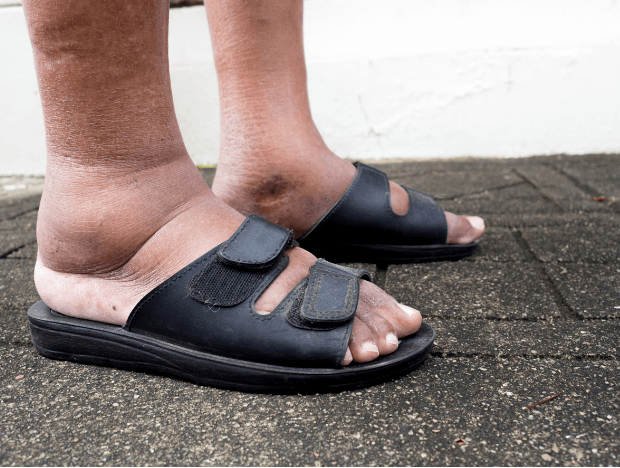
    2. Swelling in the foot or ankle
    3. Numbness anywhere in the foot, including the toes
    4. Leg and ankle pain
    5. Open and slow-healing sores
    6. Ingrown toenails
    7. Fungus and infections
    8. Bleeding corns and calluses, blisters, and bunions
    9. Cracks and extreme dryness, especially in the heel

    If you have one or more of these signs, contact your podiatrist for an evaluation. Podiatrists are trained extensively in understanding the connections between diabetes and the feet.

    Why Does Diabetes Damage the Feet?

    When you have diabetes, your body does not manufacture or process insulin efficiently. As you take in sugars and starches, your body will struggle to cope with their impact on the body and tend toward high blood sugar, also known as hyperglycemia.

    Over time, diabetes can damage the systems and organs of the body. You may have problems with your kidneys, heart, nerves, and eyes.

    Because the feet are distant from the restorative pumping action of the heart, there is an increased risk for foot damage due to peripheral vascular disease. There’s also a greater chance of having diabetic neuropathy, or nerve damage. These conditions can lead to tingling, numbness, restricted blood flow, ulcers, gangrene, and many other health problems.

    Managing the Impact of Diabetes Through Foot Care

    Your podiatrist can help you understand how diabetes will affect your feet, so you can limit its impact. Here are a few examples of how a podiatrist plays a key role in diabetes management.

    Nerve damage. A podiatrist can caution you about the everyday implications of nerve damage. For example, you may misjudge the temperature of water on your feet and hands. This could lead to scalding and burns. You also might not notice a rock in your shoe, which could cause a wound.

    Ulcers and sores. You may be more prone to persistent open wounds, so it will be important to do daily foot checks.

    Corns, cracks, and calluses. People with diabetes often have dry feet and trouble with corns and calluses. Aggressive filing and rubbing can make these worse, so consult with your podiatrist about how to treat them properly.

    Use of lotions. Certain lotions and foot products have a drying effect that’s not good for people with diabetes. Your podiatrist can recommend specific products that are the right fit for you.

    Nutrition and wellness. Smoking cigarettes and drinking alcohol can make diabetes worse, in turn affecting the health of your feet.

    Lifestyle choices. Your podiatrist may advise you not to walk barefoot, which can cause other foot problems to worsen. It’s a good idea to discuss any sports or activities you participate in, as well as upcoming vacations. Consult your podiatrist about choosing socks, hosiery, and shoes that are right for managing your diabetes.

    Routine checkups. It’s important to see a podiatrist regularly, even when your feet aren’t bothering you. Podiatrists are often the first to notice diabetes-related foot problems, because patients may have nerve damage, limited mobility, or simply can’t see issues on the bottoms of the feet.

    [/et_pb_text][et_pb_text _builder_version=”3.29.3″ hover_enabled=”0″ _i=”1″ _address=”2.0.0.1″]

    For More Information

    Do you have additional questions about the relationship between diabetes and foot care? Connect with Podiatry Associates for an evaluation and a discussion about your situation. All of our doctors are board certified/qualified and we’re dedicated to preserving your foot health.


    Other Related Articles:

    [/et_pb_text][/et_pb_column][/et_pb_row][/et_pb_section]

  • When to See a Podiatrist

    When to See a Podiatrist

    [et_pb_section bb_built=”1″ next_background_color=”#000000″][et_pb_row][et_pb_column type=”4_4″][et_pb_text _builder_version=”3.19.16″]

    Wondering if it’s time to see a podiatrist? You’re not alone – 77% of U.S. adults have experienced foot pain or problems in their lifetime. Yet only about one-third of them seek care from a podiatrist.

    At Podiatry Associates, we encourage you to address foot issues before they become emergencies. Proper foot care prevents ongoing pain, limits damage from injury and disease, and preserves your foot health for a lifetime.

    Here are some common signs it’s time to consult a podiatrist.

    [/et_pb_text][/et_pb_column][/et_pb_row][/et_pb_section][et_pb_section bb_built=”1″ _builder_version=”3.12.2″ custom_padding=”70px||70px||true” next_background_color=”#000000″ prev_background_color=”#000000″][et_pb_row custom_padding=”0px||0px||true” _builder_version=”3.9″][et_pb_column type=”4_4″][et_pb_image src=”https://podiatryassociates.org/wp-content/uploads/2019/02/Blog-When-to-see-a-podiatrist.jpg” align=”center” force_fullwidth=”on” _builder_version=”3.20.2″ custom_margin=”||0px|” custom_css_main_element=”position: relative;||z-index: 5;” /][et_pb_text _builder_version=”3.19.16″ text_font=”|||on|||||” text_font_size=”14px” text_letter_spacing=”2px” header_3_font=”|||on|||||” header_3_text_align=”center” header_3_font_size=”24px” header_3_letter_spacing=”1px” background_color=”#ffffff” box_shadow_style=”preset1″ box_shadow_spread=”3px” box_shadow_color=”rgba(0,0,0,0.1)” text_orientation=”center” max_width=”85%” max_width_tablet=”84.9%” max_width_last_edited=”on|tablet” module_alignment=”center” custom_margin=”-65px|||” custom_margin_phone=”-30px|||” custom_margin_last_edited=”on|phone” custom_padding=”30px||30px||true” custom_padding_phone=”15px||15px||true” custom_padding_last_edited=”on|phone” custom_css_main_element=”position: relative;||z-index: 10;”]

    Do You Need a Podiatrist?


    [/et_pb_text][/et_pb_column][/et_pb_row][/et_pb_section][et_pb_section bb_built=”1″ prev_background_color=”#000000″][et_pb_row][et_pb_column type=”4_4″][et_pb_text _builder_version=”3.19.16″]

    You Have Ingrown Toenails

    Some people have persistently ingrown toenails, and some just experience occasional pain from a sharp toenail edge. Either way, a podiatrist can help.

    One thing is for sure: Don’t attempt to cut or file ingrown toenails yourself. Infection can hide below the surface of an ingrown toenail, and you could quickly cause more damage than you had before.

    There are many possibilities for ingrown toenails, from simple in-office procedures to more extensive surgical options. Your podiatrist can also help you understand the underlying cause of your ingrown toenails, so you can prevent them in the future.

    You Have Bunions, Corns, or Calluses

    Any kind of bump or irregularity in the foot can be cause for concern. Many people first visit a podiatrist because they are concerned about bunions, corns, or calluses.

    A bunion is a painful bump or bulging on the big toe’s joint. Most bunions are caused by inherited conditions, walking habits, and poorly-fitting shoes. Bunions often run in families. Talk to your podiatrist about the latest in bunion care.

    Corns and calluses are dead skin cells that build up on the foot. They most commonly occur due to friction from footwear but are also associated with diabetes and other health conditions. Avoid home remedies, like herbal soaks, which may make corns and calluses worse.

    Your Feet are Dry and Cracked

    It’s normal to have dry feet from time to time, but when you have flaking skin or long, dry cracks in the feet, that’s a much more serious problem. Treating your feet with moisturizing body lotions? Not so fast. They can actually make dryness worse in the long run, depending on the ingredients and perfumes they contain.

    A podiatrist helps you get to the root cause behind your dry or cracked feet. This allows you to treat them properly and prevent the issue from worsening over time.

    You’ve Been Diagnosed with Diabetes

    A diabetes diagnosis should inspire you to call a podiatrist right away. People with diabetes are much more prone to foot problems.

    Pay close attention to changes in your feet and share them with your podiatrist. Common foot conditions that are associated with diabetes include numbness, tingling, open sores, foot and leg pain, bleeding, swelling, peeling, cracking, and changes in skin color.

    Your Child Has Foot Pain

    Perhaps your child has a foot condition from birth, or they have developed a nagging problem over time. Don’t wait to get them examined, because foot problems can lead to other problems as children’s bodies grow: leg pain, back pain, and posture problems, just to name a few.

    Although not all podiatrists accept children, they are welcome at Podiatry Associates and we invite you to reach out to us for a youth appointment.

    You Have a Sports Injury

    Whether you are injured during a sporting event, or just while throwing around a football in the yard on Superbowl Sunday? Foot injuries from sports tend to be high-impact and should be examined by a professional as quickly as possible.

    Pay close attention to sports-related injuries that include bleeding, limping, swelling, discoloration, and a feeling of tearing or popping. Help your podiatrist understand how the injury happened and how it has affected your daily activities since.

    You Have Persistent Pain

    Pain can be disabling and discouraging. It’s your body’s way of alerting you to a problem, so don’t ignore it.

    Also, don’t be embarrassed if you can’t pinpoint the exact location of your pain. Don’t worry if you can’t remember an event that triggered it.

    Unspecified pain can sometimes be an indication of serious health issues like peripheral neuropathy, diabetes, and vascular disease. Or it can just mean you need some new shoes, new habits, or a bit of TLC.

    [/et_pb_text][et_pb_text _builder_version=”3.19.16″]

    Time to See a Podiatrist?

    If you have any of the issues described above, it’s time to consult an expert. Connect with Podiatry Associates for an evaluation. All of our doctors are board certified/qualified and we’re dedicated to preserving your foot health.

    Bookmark this Event

    [/et_pb_text][/et_pb_column][/et_pb_row][/et_pb_section]

  • Dr. Scott Woodburn Discusses Common Foot Problems with ABC2 News

    Dr. Scott Woodburn Discusses Common Foot Problems with ABC2 News

    [et_pb_section fb_built=”1″ _builder_version=”3.22″ global_colors_info=”{}”][et_pb_row _builder_version=”3.25″ background_size=”initial” background_position=”top_left” background_repeat=”repeat” global_colors_info=”{}”][et_pb_column type=”4_4″ _builder_version=”3.25″ custom_padding=”|||” global_colors_info=”{}” custom_padding__hover=”|||”][et_pb_text _builder_version=”3.27.4″ global_colors_info=”{}”]

    Bunions are often thought to be caused by tight shoes, however, while shoes can make a bunion worse, they are not the cause. In this segment from ABC2 News, Dr. Scott Woodburn discusses what actually causes bunions and the best way to treat them.

    [/et_pb_text][/et_pb_column][/et_pb_row][/et_pb_section][et_pb_section fb_built=”1″ _builder_version=”3.22″ custom_padding=”70px||70px||true” global_colors_info=”{}”][et_pb_row _builder_version=”3.25″ custom_padding=”0px||0px||true” global_colors_info=”{}”][et_pb_column type=”4_4″ _builder_version=”3.25″ custom_padding=”|||” global_colors_info=”{}” custom_padding__hover=”|||”][et_pb_image src=”https://i.vimeocdn.com/video/689664503_640.jpg” align=”center” force_fullwidth=”on” align_tablet=”center” align_phone=”center” align_last_edited=”on|desktop” module_class=”video_popup video2″ _builder_version=”4.14.7″ custom_margin=”||0px|” custom_css_main_element=”position: relative;||z-index: 5;” global_colors_info=”{}”][/et_pb_image][et_pb_text _builder_version=”4.14.7″ text_font=”|||on|||||” text_font_size=”14px” text_letter_spacing=”2px” header_3_font=”|||on|||||” header_3_text_align=”center” header_3_font_size=”24px” header_3_letter_spacing=”1px” background_color=”#ffffff” text_orientation=”center” max_width=”85%” max_width_tablet=”84.9%” max_width_phone=”” max_width_last_edited=”on|tablet” module_alignment=”center” custom_margin=”-65px|||” custom_margin_tablet=”” custom_margin_phone=”-30px|||” custom_margin_last_edited=”on|phone” custom_padding=”30px||30px||true” custom_padding_tablet=”” custom_padding_phone=”15px||15px||true” custom_padding_last_edited=”on|phone” hover_enabled=”0″ custom_css_main_element=”position: relative;||z-index: 10;” box_shadow_style=”preset1″ box_shadow_spread=”3px” box_shadow_color=”rgba(0,0,0,0.1)” global_colors_info=”{}” sticky_enabled=”0″]

    Dr. Scott Woodburn Discusses Bunions

    Sorry this video is no longer available.

    Dr. Scott Woodburn talks about the cause and treatment of bunions…

    [/et_pb_text][/et_pb_column][/et_pb_row][/et_pb_section][et_pb_section fb_built=”1″ _builder_version=”3.22″ global_colors_info=”{}”][et_pb_row _builder_version=”3.25″ background_size=”initial” background_position=”top_left” background_repeat=”repeat” global_colors_info=”{}”][et_pb_column type=”4_4″ _builder_version=”3.25″ custom_padding=”|||” global_colors_info=”{}” custom_padding__hover=”|||”][et_pb_text _builder_version=”3.27.4″ global_colors_info=”{}”]

    Be sure to visit your podiatrist at the first sign of bunion development. If left untreated, a bunion will continue to worsen until non-surgical treatment is no longer an option.

    Here at Podiatry Associates, we will help you determine the best possible treatment plan to provide the relief you need. Click here to learn more about bunions or contact us today!

    Bookmark this Event.

    [/et_pb_text][/et_pb_column][/et_pb_row][/et_pb_section]

  • Diabetics at Risk for Foot Ulcers

    Diabetics at Risk for Foot Ulcers

    [et_pb_section fb_built=”1″ _builder_version=”3.22″ fb_built=”1″ bb_built=”1″ _i=”0″ _address=”0″][et_pb_row _builder_version=”3.25″ background_size=”initial” background_position=”top_left” background_repeat=”repeat” _i=”0″ _address=”0.0″][et_pb_column type=”4_4″ _builder_version=”3.25″ custom_padding=”|||” _i=”0″ _address=”0.0.0″ custom_padding__hover=”|||”][et_pb_text _builder_version=”3.27.4″ _i=”0″ _address=”0.0.0.0″]

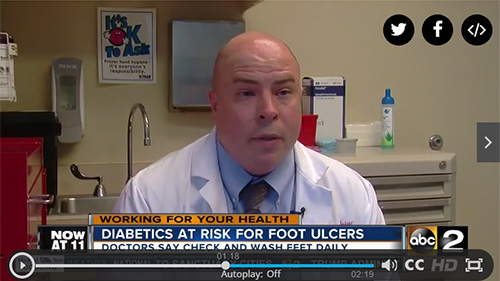
    Podiatry Associates’ Dr. Brian Belgin discusses complications of diabetes and the risk for foot ulcers on www.WMAR2News.com. Symptoms include fever, chills, shortness of breath, spikes in blood sugar.

    Click to watch this important coverage:

    [/et_pb_text][/et_pb_column][/et_pb_row][/et_pb_section][et_pb_section fb_built=”1″ _builder_version=”3.22″ custom_padding=”70px||70px||true” fb_built=”1″ bb_built=”1″ _i=”1″ _address=”1″][et_pb_row _builder_version=”3.25″ custom_padding=”0px||0px||true” _i=”0″ _address=”1.0″][et_pb_column type=”4_4″ _builder_version=”3.25″ custom_padding=”|||” _i=”0″ _address=”1.0.0″ custom_padding__hover=”|||”][et_pb_image src=”https://podiatryassociates.org/wp-content/uploads/2018/07/diabetes-foot-ulcers-podiatry-assoc-video-4-26-171.jpg” url=”https://www.youtube.com/watch?v=2YBtspm8j8M” align=”center” force_fullwidth=”on” align_tablet=”center” align_last_edited=”on|desktop” admin_label=”Image” module_class=”video_popup video2″ _builder_version=”3.29.3″ custom_margin=”||0px|” hover_enabled=”0″ custom_css_main_element=”position: relative;||z-index: 5;” _i=”0″ _address=”1.0.0.0″][/et_pb_image][et_pb_text _builder_version=”3.27.4″ text_font=”|||on|||||” text_font_size=”14px” text_letter_spacing=”2px” header_3_font=”|||on|||||” header_3_text_align=”center” header_3_font_size=”24px” header_3_letter_spacing=”1px” background_color=”#ffffff” text_orientation=”center” max_width=”85%” max_width_tablet=”84.9%” max_width_last_edited=”on|tablet” module_alignment=”center” custom_margin=”-65px|||” custom_margin_phone=”-30px|||” custom_margin_last_edited=”on|phone” custom_padding=”30px||30px||true” custom_padding_phone=”15px||15px||true” custom_padding_last_edited=”on|phone” custom_css_main_element=”position: relative;||z-index: 10;” box_shadow_style=”preset1″ box_shadow_spread=”3px” box_shadow_color=”rgba(0,0,0,0.1)” _i=”1″ _address=”1.0.0.1″]

    Diabetics at Risk for Foot Ulcers

    Dr. Brian Belgin discusses how diabetic foot ulcers left untreated can lead to amputation.

    [/et_pb_text][/et_pb_column][/et_pb_row][/et_pb_section][et_pb_section fb_built=”1″ _builder_version=”3.22″ fb_built=”1″ bb_built=”1″ _i=”2″ _address=”2″][et_pb_row _builder_version=”3.25″ background_size=”initial” background_position=”top_left” background_repeat=”repeat” _i=”0″ _address=”2.0″][et_pb_column type=”4_4″ _builder_version=”3.25″ custom_padding=”|||” _i=”0″ _address=”2.0.0″ custom_padding__hover=”|||”][et_pb_text _builder_version=”3.27.4″ _i=”0″ _address=”2.0.0.0″]

    Bookmark this Event

    [/et_pb_text][/et_pb_column][/et_pb_row][/et_pb_section]