[et_pb_section fb_built=”1″ _builder_version=”3.22″ global_colors_info=”{}”][et_pb_row _builder_version=”3.25″ background_size=”initial” background_position=”top_left” background_repeat=”repeat” global_colors_info=”{}”][et_pb_column type=”4_4″ _builder_version=”3.25″ custom_padding=”|||” global_colors_info=”{}” custom_padding__hover=”|||”][et_pb_text _builder_version=”3.27.4″ global_colors_info=”{}”]
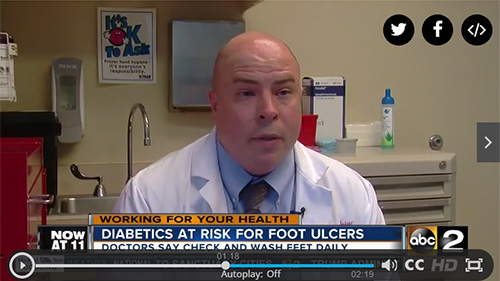
Bunions are often thought to be caused by tight shoes, however, while shoes can make a bunion worse, they are not the cause. In this segment from ABC2 News, Dr. Scott Woodburn discusses what actually causes bunions and the best way to treat them.
[/et_pb_text][/et_pb_column][/et_pb_row][/et_pb_section][et_pb_section fb_built=”1″ _builder_version=”3.22″ custom_padding=”70px||70px||true” global_colors_info=”{}”][et_pb_row _builder_version=”3.25″ custom_padding=”0px||0px||true” global_colors_info=”{}”][et_pb_column type=”4_4″ _builder_version=”3.25″ custom_padding=”|||” global_colors_info=”{}” custom_padding__hover=”|||”][et_pb_image src=”https://i.vimeocdn.com/video/689664503_640.jpg” align=”center” force_fullwidth=”on” align_tablet=”center” align_phone=”center” align_last_edited=”on|desktop” module_class=”video_popup video2″ _builder_version=”4.14.7″ custom_margin=”||0px|” custom_css_main_element=”position: relative;||z-index: 5;” global_colors_info=”{}”][/et_pb_image][et_pb_text _builder_version=”4.14.7″ text_font=”|||on|||||” text_font_size=”14px” text_letter_spacing=”2px” header_3_font=”|||on|||||” header_3_text_align=”center” header_3_font_size=”24px” header_3_letter_spacing=”1px” background_color=”#ffffff” text_orientation=”center” max_width=”85%” max_width_tablet=”84.9%” max_width_phone=”” max_width_last_edited=”on|tablet” module_alignment=”center” custom_margin=”-65px|||” custom_margin_tablet=”” custom_margin_phone=”-30px|||” custom_margin_last_edited=”on|phone” custom_padding=”30px||30px||true” custom_padding_tablet=”” custom_padding_phone=”15px||15px||true” custom_padding_last_edited=”on|phone” hover_enabled=”0″ custom_css_main_element=”position: relative;||z-index: 10;” box_shadow_style=”preset1″ box_shadow_spread=”3px” box_shadow_color=”rgba(0,0,0,0.1)” global_colors_info=”{}” sticky_enabled=”0″]
Dr. Scott Woodburn Discusses Bunions
Sorry this video is no longer available.
Dr. Scott Woodburn talks about the cause and treatment of bunions…
[/et_pb_text][/et_pb_column][/et_pb_row][/et_pb_section][et_pb_section fb_built=”1″ _builder_version=”3.22″ global_colors_info=”{}”][et_pb_row _builder_version=”3.25″ background_size=”initial” background_position=”top_left” background_repeat=”repeat” global_colors_info=”{}”][et_pb_column type=”4_4″ _builder_version=”3.25″ custom_padding=”|||” global_colors_info=”{}” custom_padding__hover=”|||”][et_pb_text _builder_version=”3.27.4″ global_colors_info=”{}”]
Be sure to visit your podiatrist at the first sign of bunion development. If left untreated, a bunion will continue to worsen until non-surgical treatment is no longer an option.
Here at Podiatry Associates, we will help you determine the best possible treatment plan to provide the relief you need. Click here to learn more about bunions or contact us today!
Bookmark this Event.
[/et_pb_text][/et_pb_column][/et_pb_row][/et_pb_section]