Month: March 2021

  • Toenail Fungus

    Toenail Fungus

    [et_pb_section fb_built=”1″ _builder_version=”4.8.2″ custom_padding=”3px|0px|14px|0px|false|false”][et_pb_row _builder_version=”4.8.2″ background_size=”initial” background_position=”top_left” background_repeat=”repeat”][et_pb_column type=”4_4″ _builder_version=”3.25″ custom_padding=”|||” custom_padding__hover=”|||”][et_pb_text _builder_version=”4.8.2″]

    Each year, our Podiatry Associates in Columbia, MD, treat hundreds of patients suffering from onychomycosis. Although this condition is rarely life-threatening for most, it can dampen self-esteem because of the way it alters toenails. For those with autoimmune disorders, like diabetes, it can also pose serious health issues.

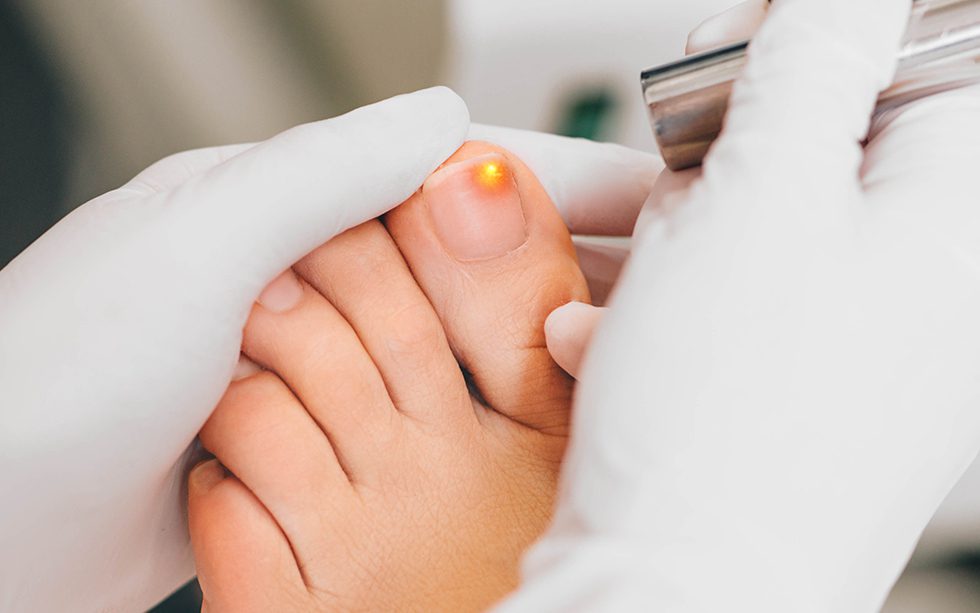
    Luckily, onychomycosis treatment provides relief, and with the help of the PinPointe™ FootLaser®, most patients see results after a single 30-minute treatment.

    What Is Onychomycosis?

    Onychomycosis is more commonly known as toenail fungus. Symptoms of toenail fungus include nail thickness, yellowing, and brittleness. Over time, toenails may break off easily and appear jagged and bark-like. If left untreated for too long, and especially if the person suffering from onychomycosis also has an underlying health issue, toenail fungus can lead to swelling and discomfort. 

    When caught quickly, onychomycosis does minor damage to nail beds and causes little pain. However, it can cause those with the condition to feel extremely self-conscious, and it can make wearing shoes and socks difficult in extreme cases.

    What Causes Onychomycosis?

    Onychomycosis is typically caused by one of several fungi strains conditioned to grow and feed on keratin, which is the substance that makes up nails and hair. It thrives in moist, warm, wet environments like socks and shoes, which means anyone can get it. However, those who are most likely to get onychomycosis include:

    • Those who frequently wear nail polish on their toenails and do not allow their toenails to breathe
    • Those who do not adequately clean their feet and toenails regularly
    • Those who commonly wear ill-fitting or tight shoes or stockings
    • Those with circulation issues
    • Those with chronic immune disorders, such as diabetes
    • Those who frequent locker rooms, such as gym-goers, athletes, police, and military personnel

    Is Toenail Fungus Contagious?

    Toenail fungus is contagious, but toenail fungus sufferers can prevent most cases with good hygiene practices. To avoid catching toenail fungus, be sure to:

    • Wear shower shoes in public gyms and locker rooms, and wash your feet thoroughly at the gym and the next time you shower at home.
    • Dry your feet off thoroughly after showering, and consider a foot powder to keep your feet dry and clean.
    • If you do catch athlete’s foot from a gym, treat it with a topical cream as soon as you notice symptoms. Treat it for the entire suggested period, and then monitor your feet afterward.
    • Avoid sharing footwear with others, and if you have experienced toenail fungus or athlete’s foot in the past, purchase a sterilization spray to spray into your shoes.
    • If OTC solutions do not work effectively within the allotted treatment period, seek professional help right away.

    What Is The Most Effective Treatment For Toenail Fungus?

    There are several ways to treat toenail fungus, but the most effective treatment for toenail fungus is to seek professional help for the issue. OTC sprays, nail polishes, and creams sometimes do the trick, but Podiatry Associates in Columbia know how to combat toenail fungus each time it occurs effectively.

    We use the PinPointe™ FootLaser® to target and kill off the fungus feeding on your toenails. Better yet, the procedure is painless, typically takes less than 30 minutes to complete.

    If you’re suffering from onychomycosis, book a PinPointe™ FootLaser® session at Podiatry Associates in Columbia, MD, to get rid of your toenail fungus today.

    [/et_pb_text][/et_pb_column][/et_pb_row][/et_pb_section]

  • Diabetes & Your Feet

    Diabetes & Your Feet

    [et_pb_section fb_built=”1″ _builder_version=”4.8.2″ custom_padding=”3px|0px|14px|0px|false|false”][et_pb_row _builder_version=”4.8.2″ background_size=”initial” background_position=”top_left” background_repeat=”repeat”][et_pb_column type=”4_4″ _builder_version=”3.25″ custom_padding=”|||” custom_padding__hover=”|||”][et_pb_text _builder_version=”4.8.2″]

    Diabetes is a metabolic disorder that results in elevated glucose (sugar) levels in the blood.  The glucose circulates through the arteries, touching every tissue and part of the body.  Over time, the high sugar levels may cause damage to other parts of the body.  

    Common complications of diabetes include loss of vision (retinopathy), kidney failure (nephropathy), and foot/leg amputation (neuropathy).  Specific foot complications may include poor circulation, loss of feeling in the foot, foot ulcers, non-healing wounds, infections in the foot, bone infections, gangrene, and amputation.

    Prevention

    To prevent or minimize diabetic complications:

    • Keep an annual podiatry foot exam 
    • Examine the feet daily including: the top of the feet, the bottom of the feet and between the toes
    • Seek medical evaluation immediately if any visible changes or concerns with the feet or legs develop
    • Wash and dry the feet thoroughly, especially between the toes
    • Apply moisturizing cream or lotion to dry skin on the feet daily.  Do not apply moisturizer between the toes
    • Maintain good control of blood sugar levels using diet, exercise, and when recommended, medication
    • Schedule regular appointments with your primary care physician
    • This list is not inclusive for all recommendations and not specific for all patients. Ask your doctor or visit the ADA website for further specific home care information.

    Annual Podiatric Foot Exam

    The American Diabetic Association recommends every diabetic to have an annual foot exam.  The purpose of the exam is to prevent diabetic foot complications.  During the exam, four areas of the foot extremity health will be examined, including: the circulation, the sensation, the skin (including hair and nails), and the orthopedic (bones, joints, alignment, and deformity).  Electronic doppler devices may be used to evaluate the circulation in better details.

    A referral to a vascular specialist may be recommended if any deficiency is detected.  Both standard clinical exams and electronic doppler testing may evaluate the circulation in greater detail which enables a more accurate depiction of what is occurring.  

    MVS Podiatry Associates has treated diabetic feet since 1965. Our goal is to prevent diabetic foot complications.  However, when foot complications do occur, our providers have the training to treat many different diagnoses, such as diabetic foot ulcers.

    What is a Diabetic Foot Ulcer

    The definition of an ulcer is a hole in the surface or lining of a tissue.  A gastric ulcer is a hole or erosion in the lining of the stomach.  Similarly, a foot ulcer is an opening in the skin of the foot.  A foot ulcer may then allow bacteria to enter the foot causing an infection.   The infection may spread or deepen in the foot causing tissue damage, increasing the need for hospitalization and the risk for amputation.  

    Even a tiny skin wound or ulcer is a reason for medical concern and should have medical evaluation and treatment within 24-48 hours.  Early treatment will decrease the risk of non-healing and diabetic foot complications.  

    How Do You Treat a Diabetic Foot Ulcer

    Each patient will require a unique treatment plan.  Initially, a diabetic foot exam will be performed to establish the health of the patient’s extremity and foot wound.  The exam will help determine:

    • The extent of the foot ulcer
    • The apparent circulation and healing ability of the patient
    • If infection is present

    Additional tests that may be ordered by your provider are:

    • Foot x-ray
    • Culture & Sensitivity test
    • Doppler (circulation) test
    • MRI
    • Blood glucose

    Treatment of diabetic foot ulcers can vary based on the diagnosis and severity.  Treatment may include: 

    • Daily wound care
    • Off-loading the ulcer or foot
    • Antibiotics
    • Medical shoes and or custom insoles (orthotics)
    • Debridement
    • Surgery
    • Specific follow-ups with your provider

    How Long Does it Take Diabetic Foot Ulcers to Heal

    Prevention is the best medicine.  When applied to diabetic foot ulcers, this includes:

    • Maintaining good glucose control with diabetes
    • Keeping annual and other scheduled podiatry visits
    • Wearing appropriate shoe gear recommended by a podiatrist
    • Inspecting the foot daily for potential ulcers
    • Seeking immediate podiatric evaluation with any foot wound, foot concern, or any general change in the feet

    With prevention and proper medical treatment, most foot ulcers will heal without severe complications.  If you would like to request an appointment for a diabetic foot consultation, check out our website.

    [/et_pb_text][/et_pb_column][/et_pb_row][/et_pb_section]